
When it comes to eating before swimming, it seems that a lot of us have been fed a lie. You’ve probably been told at some point in your life that you shouldn’t take the plunge until at least thirty minutes after you’ve had food, in case you get cramps, right? Wrong.
There’s actually no evidence to suggest that exercising after eating will give you cramps, although it may be uncomfortable and possibly even make you feel slightly nauseous if you still have half-digested food in your stomach, as blood flow is redirected to your muscles.
So, whilst we aren’t suggesting you have a full three-course meal right before you’re about to strip off, there’s no need for a blanket ban on eating before swimming. Like with every other physical activity, to get the most out of your body, you need to think about what you’re putting into it.
Whether you’re already a regular visitor to the lanes, or only just considering diving into the deep end — these are our best supplements to power your performance in the pool.

Supplements To Have Before Swimming
Instant Oats
Swimming uses a lot of energy — so you need to start with plenty of fuel in the tank. Studies have shown that swimmers need carbs… and lots of them.1,2 Research done with twelve highly trained male swimmers even found that some experienced chronic muscular fatigue as a result of not having enough carbohydrates to match the energy demands of heavy training.3
Our Instant Oats are a perfect, fuss-free solution to packing them in — with 62g of carbs per serving. They’re milled Scottish oats in an ultra-fine powder, so can be mixed with water or milk for porridge, or just as easily added to your shakes and smoothies.
Instant Oats are the ideal breakfast for eating before swimming for convenience. Plus, they’re low in sugar, high in fibre, and have 11g of protein per serving too, which helps to grow and maintain muscle mass — just what you need to power your butterfly stroke.
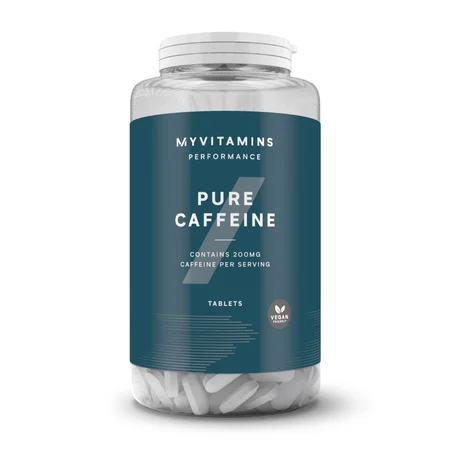
Pure Caffeine Tablets
Caffeine is a super-effective pre-workout ingredient that’s been shown to delay fatigue4 and allow athletes to train with more power, for longer.5 A study in the British Journal of Nutrition found that when a group of sprint swimmers were given caffeine before a 50m swim and a 45 second power test, they were faster and had a higher peak power than the group who were given a decaf placebo.6
Our powerful Caffeine Pro™ tablets are ideal to give you that buzz without the calories or hassle of queuing for a coffee. And no one wants to feel a grande-latte-to-go sloshing about as soon as they get going with front crawl.
Creatine
Creatine is another tried and tested supplement that’s been proven to increase physical performance in successive bursts of short-term, high-intensity exercise.7 In simple terms, this is because creatine is a chemical compound that supplies the muscles with energy in the form of ATP, which is used rapidly during exercise. More creatine = more energy = more power for you!
Swimming is a sport that requires lots of power — you have to push your body against water to move forward, and you can feel the resistance of it pushing back. Because creatine fuels anaerobic exercise, it is the most beneficial for sprinters. It is less likely to be beneficial for distance swimmers or long aerobic swim sessions.
A study carried out with 18 male and female junior competitive swimmers found that the group who had been given creatine over the course of nine days of training were swimming significantly faster, with a significantly decreased swim time in their 100m sprints, compared to the group given a placebo.8
Put creatine to the test for your own length time — we have a range of high-quality supplements for you to choose from, from super-convenient Creatine Monohydrate tablets, to finely micronised Creapure® powder.

Best Supplements For During Your Swim
Maltodextrin Powder
Need a pick-me-up during an early morning session? Maltodextrin is a quick and easy way to give your muscles (and brain) the carbs they need to get started. These quick digesting carbs will rev your engine when you need some energy.
Loaded with 50g of carbohydrates, our Maltodextrin Carbs also help to replenish glycogen stores, making sure your muscles are ready to recover and push hard for your next swim. This is a vegan, gluten free way to make sure you’re giving your body the carbs it needs to excel.
Electrolyte Powder
Hydration is absolutely key to any sport or physical activity, and it’s really important that you stay topped up during swimming. This includes replacing the electrolytes you lose through sweat, as well as water, which is where Electrofuel comes in.
Electrofuel contains a blend of three essential electrolytes — sodium, potassium, and magnesium — which are vital to provide the electrical energy needed for many important functions in the body, including nerve reactions and muscle function.9 You’ll get an additional boost from the beneficial minerals in coconut water while also re-fueling with 45g of carbohydrate per serving. Just add a scoop to your water bottle and sip away.

Supplements To Have After Swimming
Extreme Recovery Blend
Studies have shown that supplements which combine carbohydrates and protein are most effective at replenishing muscle glycogen after exercise,11 which is exactly what this hard-hitting blend delivers.
Extreme Recovery Blend is packed with 26g of protein per 100g to support the growth and maintenance of muscle mass, along with 42g of carbohydrates from waxy maize starch and maltodextrin, ideal for muscle recovery.10
It also contains creatine and key vitamins and minerals, which are involved in muscle protein synthesis, 12,13 further supporting your recovery. It’s the perfect post-swim shake.
Daily Vitamins
And last, but definitely not least, keeping on top of your vitamins is super-important for your swim performance, as they help you stay fit and healthy enough to return to the pool. Our Daily Vitamin tablets are a quick and convenient way to make sure you’re hitting your recommended daily intake for seven essential vitamins — supporting your immune system, nervous system and metabolism.
Plus, vitamin C and E are both antioxidants, which means that they can help to reduce skeletal muscle damage and inflammation after strenuous exercise. A study in Sports Medicine on the role of antioxidant vitamins in the prevention of exercise-induced muscle damage concluded that these vitamins could be recommended to those performing regular, heavy exercise.14
Take Home Message
Whether you’re looking to improve your stroke power with creatine, or speed up your recovery with a carb-fuelled snack — with these top supplements for swimming you’ll be in the fast lane before you know it.
FAQ
What should I have before swimming?
We recommend taking our instant oats for a boost of carbohydrates, caffeine pro to delay fatigue, and creatine in order to increase short burst power.
What should I take whilst swimming?
Whilst swimming we recommend a carbohydrate and electrolyte gel such as our Energy Elite in order to replenish essential salts lost whilst sweating.
What should I have after swimming?
After training we’d recommend a mix of carbohydrates and protein for muscle recovery,such as our Energy Elite Bar or Recovery XS shake. Both loaded with protein and carbohydrates to ensure muscle replenishment.



Claire is a Registered Dietitian through the Academy of Nutrition and Dietetics and a board-certified Health and Wellness Coach through the International Consortium for Health and Wellness Coaching. She has a Bachelor of Science in Biology and a Master’s degree in Clinical Dietetics and Nutrition from the University of Pittsburgh.
Talking and writing about food and fitness is at the heart of Claire’s ethos as she loves to use her experience to help others meet their health and wellness goals.
Claire is also a certified indoor cycling instructor and loves the mental and physical boost she gets from regular runs and yoga classes. When she’s not keeping fit herself, she’s cheering on her hometown’s sports teams in Pittsburgh, or cooking for her family in the kitchen.
Find out more about Claire’s experience here.
- Shaw, G., Boyd, K. T., Burke, L. M., & Koivisto, A. (2014). Nutrition for swimming. International journal of sport nutrition and exercise metabolism, 24(4), 360-372.
- Berning, J. R., Troup, J. P., VanHandel, P. J., Daniels, J., & Daniels, N. (1991). The Nutritional Habits of Young Adolescent Swimmers. International Journal of Sport Nutrition, 1(3), 240-248.
- Costill, D. L., Flynn, M. G., Kirwan, J. P., Houmard, J. A., Mitchell, J. B., Thomas, R., & Han Park, S. (1988). Effects of repeated days of intensified training on muscle glycogen and swimming performance. Medicine & Science in Sports & Exercise, 20(3), 249-254.
- Graham, T., Rush, J. and Soeren, M. (1994). Caffeine and Exercise: Metabolism and Performance. Canadian Journal of Applied Physiology, 19(2), pp. 111-138.
- Graham, T. (2001). Caffeine and Exercise. Sports Medicine, [online] 31(11), pp.785-807.
- Lara, B., Ruiz-Vicente, D., Areces, F., Abián-Vicén, J., Salinero, J. J., Gonzalez-Millán, C., … Del Coso, J. (2015). Acute consumption of a caffeinated energy drink enhances aspects of performance in sprint swimmers. British Journal of Nutrition, 114(06), 908-914.
- Volek, J. S., Kraemer, W. J., Bush, J. A., Boetes, M., Incledon, T., Clark, K. L., & Lynch, J. M. (1997). Creatine supplementation enhances muscular performance during high-intensity resistance exercise. Journal of the American Dietetic Association, 97(7), 765-770.
- Grindstaff, P. D., R. B. Kreider, R. Bishop, et al. Effects of creatine supplementation on repetitive sprint performance and body composition in competitive swimmers. Int. J. Sport Nutr.7:330-346, 1997.
- Magnesium contributes to electrolyte balance. Calcium contributes to normal muscle function and neurotransmission. Potassium contributes to normal muscle function and normal function of the nervous system.
- Carbohydrates contribute to the recovery of normal muscle function after highly intensive and/or long lasting physical exercise leading to muscle fatigue and the depletion of glycogen stores in skeletal muscle. The beneficial effect is obtained with the consumption of carbohydrates, from all sources, at a total intake of 4 g per kg body weight, at doses, within the first 4 hours and no later than 6 hours, following highly intensive and/or long-lasting physical exercise leading to muscle fatigue and the depletion of glycogen stores in skeletal muscle.
- Ivy, J. L., Goforth Jr, H. W., Damon, B. M., McCauley, T. R., Parsons, E. C., & Price, T. B. (2002). Early postexercise muscle glycogen recovery is enhanced with a carbohydrate-protein supplement. Journal of Applied Physiology, 93(4), 1337-1344.
- Anthony, J. C., Anthony, T. G., & Layman, D. K. (1999). Leucine supplementation enhances skeletal muscle recovery in rats following exercise. The Journal of nutrition, 129(6), 1102-1106.
- Higashiguchi, T., Hasselgren, P. O., Wagner, K., & Fischer, J. E. (1993). Effect of glutamine on protein synthesis in isolated intestinal epithelial cells.Journal of Parenteral and Enteral Nutrition, 17(4), 307-314.
- Dekkers, J. C., van Doornen, L. J., & Kemper, H. C. (1996). The role of antioxidant vitamins and enzymes in the prevention of exercise-induced muscle damage. Sports medicine, 21(3), 213-238.